

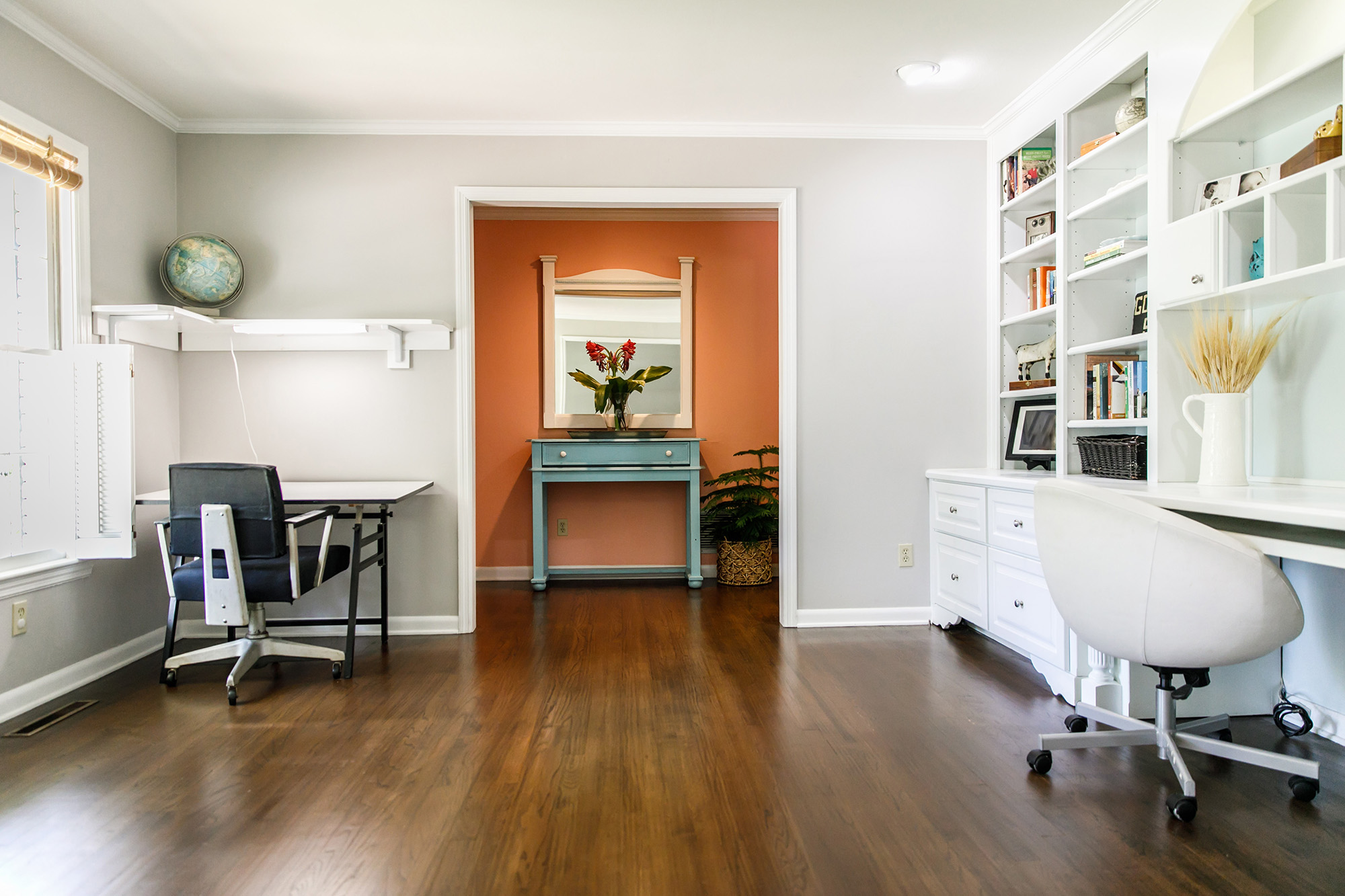
If your video calls echo, your floor is usually part of the problem. Hard surfaces bounce sound around a room, and that reflected noise lands right back in your microphone. After a few years of working from spare bedrooms and basement offices, plenty of homeowners across Southwestern Ontario have noticed the difference a floor makes once they actually hear themselves on a recording.
The good news is that this is a solvable problem, and you do not have to give up the floors you love in the rest of your home to fix it.
Why Hard Floors Echo on a Call
Sound behaves a lot like light. When it hits a hard, flat surface such as tile, stone or finished hardwood, most of it reflects rather than getting absorbed. In a room with hard floors, bare walls and a window or two, that reflected energy builds into reverberation, the faint ringing tail you hear after you speak. Your microphone captures it along with your voice, which is why you can sound distant or boxy even on a good headset.
This is not a flaw in hard flooring. The same reflective quality that makes a tile entryway feel crisp and clean is simply working against you in a small, enclosed room where you want speech to stay tight and controlled.
Carpet and Underlay Do the Heavy Lifting
For a dedicated office, carpet is the clear winner on acoustics. The fibres absorb mid and high frequency sound instead of reflecting it, which shortens reverberation and cleans up your audio noticeably. Pair the carpet with a quality underlay and the benefit grows, because the cushion adds mass and absorption underfoot and also softens impact noise like footsteps and rolling chairs.
If your office sits above a living space, that impact reduction matters to everyone else in the house. Carpet over a good underlay is one of the most effective ways to stop footfall and chair noise from traveling through the floor into the room below, which keeps a home office from disrupting the rest of the household during the day.
Smart Zoning Beats Picking One Floor
You do not have to carpet the whole house to win on sound. The smarter approach is zoning, which means choosing each floor for the job that room actually does. Keep hardwood or tile in your kitchen, entry and main living areas where durability and easy cleaning come first, then use carpet or a thick area rug with a felt pad in the office, the bedroom and any space where quiet matters most.
A generous area rug over hardwood is a particularly flexible move. It tames reflections in the room, protects the wood underneath, and can be swapped out later if your needs change. That way your floors stay beautiful and practical everywhere while your calls stay clear where it counts.
How to Test a Room Before You Commit
Before you change anything, record a short voice memo standing in the middle of the room and listen back on headphones. If you hear a hollow ring after your words, the room is reflective and would benefit from soft surfaces. Clap once and listen for a sharp slap of echo, which tells you the same thing.
Then talk to a flooring specialist about the room above or below, the subfloor and how the space gets used, because the right answer for a basement office differs from a second floor spare room. A short conversation often saves you from buying the wrong product twice.
Our design consultants at Sacwal Flooring Centres can walk you through carpet, underlay, hardwood and tile side by side, and help you build a room by room plan that sounds as good as it looks. We proudly serve Chatham, ON, London, ON, and Sarnia, ON.
Chatham, ON, London, ON, Sarnia, ON, and Windsor, ON
Ready to make your home office sound professional? Contact us today or stop by your nearest showroom to get started.

