

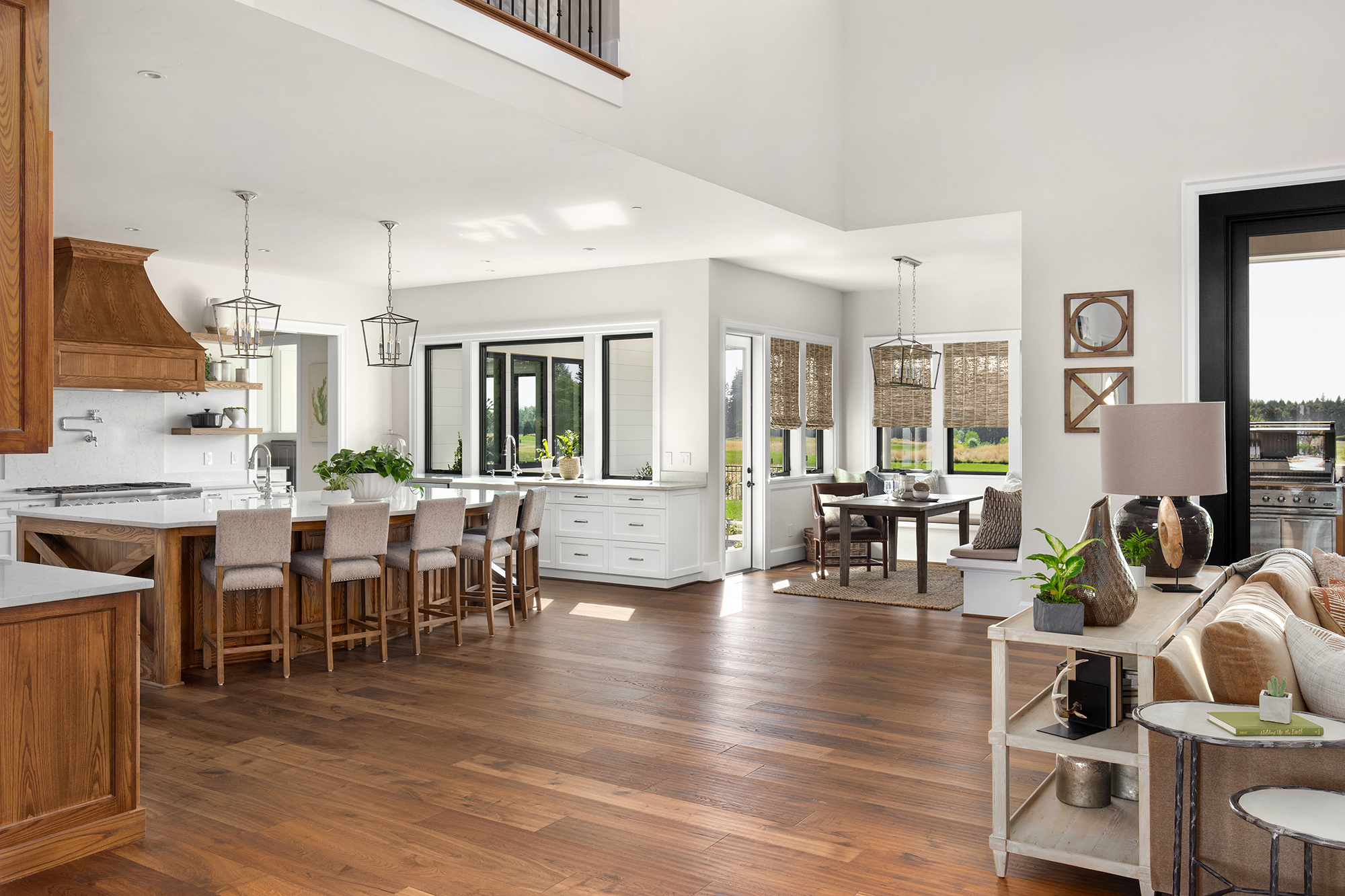
Gray flooring had a long run because it felt clean, neutral, and easy to decorate around. The problem is that many cool gray floors now make homes feel flatter than intended, especially when paired with white walls, black hardware, and pale furniture. That is why warmer wood tones are getting attention again, but homeowners are right to be cautious. Warm does not have to mean orange, yellow, shiny, or overly rustic.
The goal is controlled warmth. A good warm wood floor should make a room feel softer, more grounded, and more connected to real materials without pulling the whole space into an early-2000s honey oak mood. Whether you are updating a living room, replacing old laminate, or planning new hardwood throughout a main floor, the undertone matters more than the trend name.
Why gray floors are starting to feel dated
Cool gray flooring became popular because it worked with modern farmhouse, industrial, and white kitchen design. It created a quiet background, but in many homes, that background now feels cold. Gray floors can also fight with cream walls, beige upholstery, warm lighting, natural wood furniture, and older trim. Instead of feeling neutral, the floor starts to look disconnected from everything else in the room.
This is especially noticeable in Ontario homes with changing natural light. A floor that looks balanced under showroom lighting can turn blue, purple, or washed-out in a north-facing room. In open-concept spaces, gray flooring can also make transitions harder because the same cool tone has to work with kitchens, dining rooms, hallways, and living rooms at once.
How to choose warm wood without going orange
The safest direction is usually a warm neutral brown, light natural oak, soft taupe oak, muted walnut, or medium brown with a beige base. These tones add warmth without the strong amber pull that makes some floors look orange. Red oak, cherry stains, glossy golden finishes, and heavy yellow undertones need more care because they can intensify under warm bulbs and afternoon sun.
When comparing hardwood or engineered hardwood samples, place them beside your fixed finishes. Cabinets, stair railings, fireplace stone, wall colour, and existing trim will reveal whether the floor is balanced or too loud. A sample that looks beautiful by itself can look orange once it sits next to white shaker cabinets or cream walls. That is why flooring should be selected with the whole room in mind, not from a tiny board in isolation.
The technical details that change the final look
Species makes a major difference. White oak often gives a more neutral, modern warmth because its grain and undertone are calmer. Red oak can still work beautifully, but the stain needs to be chosen carefully because the natural pink and red undertones can show through. Walnut creates a richer, deeper look, while maple can lean cleaner and lighter but may show colour variation differently.
Finish sheen also matters. Matte and low-sheen finishes usually look more current and are better at hiding fine dust, small scuffs, and everyday traffic. High-gloss warm floors can look dated quickly because the shine exaggerates colour and reflects every mark. Plank width is another factor. Wider planks create a more relaxed, modern look, while narrow strips can feel busier, especially in homes already full of trim lines, furniture legs, and room transitions.
How warm floors work with today’s interiors
Warm wood floors pair well with the current shift toward layered interiors, vintage furniture, textured walls, deeper paint colours, and natural materials. Instead of treating the floor as a flat surface, designers are using it as the grounding element that lets stronger choices feel intentional. A warm oak floor can make burgundy, olive, clay, cream, navy, and mushroom tones feel more settled.
If your home has inherited furniture, antique pieces, or traditional millwork, warm wood can help those elements feel chosen rather than leftover. If your style is more modern, choose a cleaner grain, wider plank, and less variation. The best warm floors do not shout. They quietly make the room feel finished, which is exactly why they are replacing cool gray in so many renovation plans.
When warm wood is the wrong choice
Warm wood is not always the answer. In very small rooms with already-yellow lighting, an amber floor can make the space feel heavy. In homes with strong red brick, orange-toned cabinets, or older golden trim, the wrong floor can multiply the warmth instead of balancing it. In those cases, a neutral brown, soft greige wood tone, or stone-look tile may be a better direction.
It is also important to think about lifestyle. Solid hardwood can be refinished in the future, but it needs the right environment and care. Engineered hardwood may be better for certain installations because of its layered construction and dimensional stability. A showroom consultation can help determine whether hardwood, engineered hardwood, luxury vinyl, or laminate gives the right look with the right performance.
The warm wood comeback is not about copying old orange floors. It is about using natural, balanced wood tones to make homes feel more comfortable, current, and personal. The right choice depends on undertone, species, plank width, sheen, lighting, and the materials already in your home.
For homeowners comparing flooring options in Chatham, ON, London, ON, and Sarnia, ON, Sacwal Flooring Centres can help narrow the choices with real samples, practical product guidance, and installation insight. Visit Chatham, ON, London, ON, Sarnia, ON, and Windsor, ON to compare hardwood and wood-look flooring in person, or contact us to start planning a floor that feels warm without feeling dated.

