

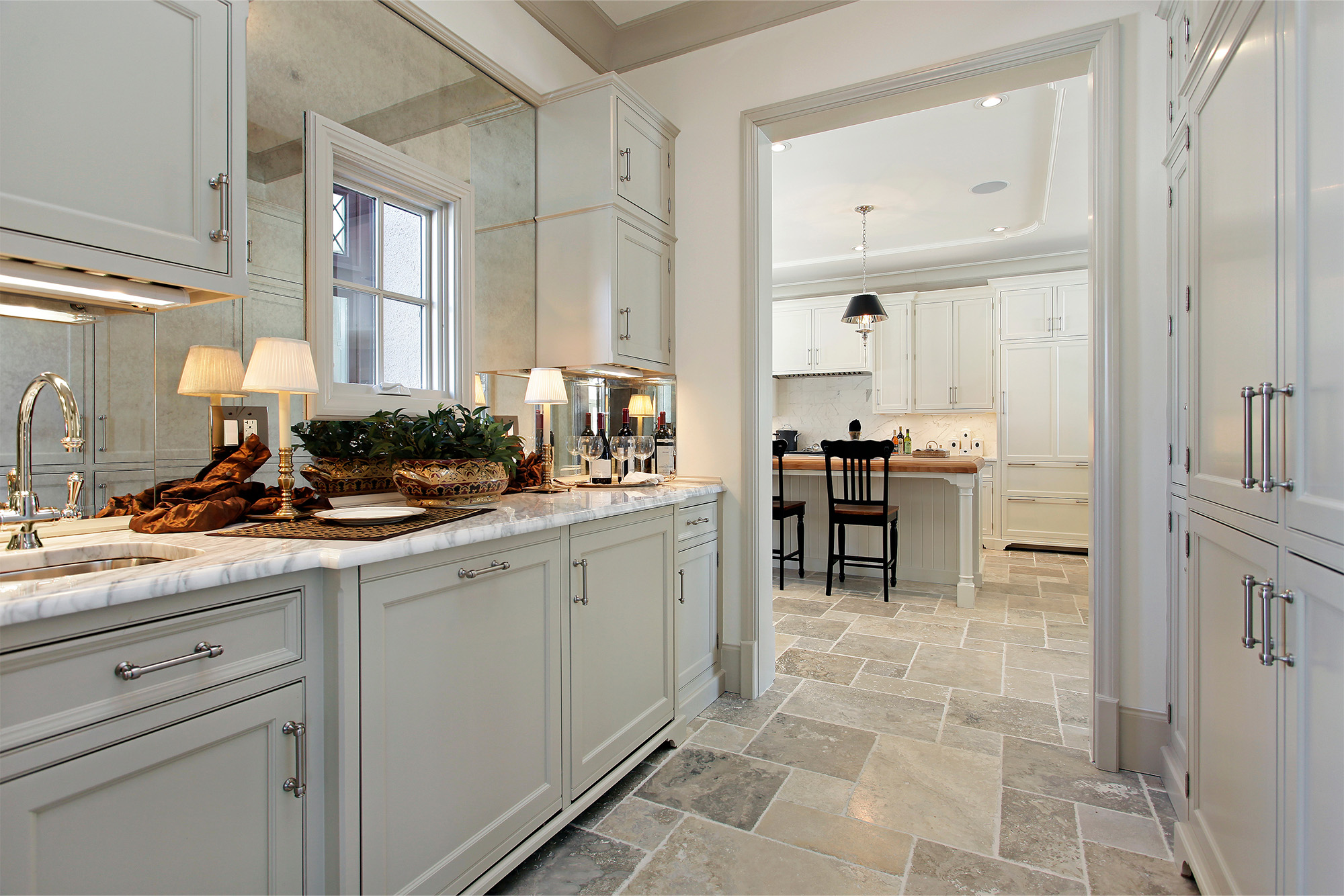
Why Hard Water Is a Bigger Issue for Stone Than for Tile
Hard water contains dissolved calcium and magnesium that get left behind as tiny mineral deposits every time water evaporates on a surface, and stone reacts to that residue differently than ceramic or porcelain tile does. Natural stone like marble, travertine, and limestone is porous at a microscopic level, which means mineral deposits do not just sit on top the way they would on glazed tile, they can settle into the surface texture over repeated exposure.
This is especially relevant for homes across Chatham-Kent and other rural parts of Southwestern Ontario that rely on well water, since well water tends to run harder than treated municipal supplies in cities like London. If you have noticed a chalky film on stone in an entryway, mudroom, or bathroom that never fully wipes away, mineral buildup is almost always the cause rather than a problem with the stone itself.
What Hard Water Buildup Actually Looks Like
Early stage mineral buildup on stone usually shows up as a dull, slightly cloudy haze rather than obvious spots, which is why many homeowners assume the floor just needs a better cleaner rather than a different approach entirely. Left unaddressed over months or years, that haze can deepen into a rougher texture you can feel underfoot, particularly on softer stones like limestone and travertine that etch more easily than granite.
The other common sign is uneven sheen across a floor that was originally polished consistently, since areas near sinks, tubs, or exterior entry points get more direct water exposure than the rest of the room. If one section of your stone floor looks noticeably duller than the rest and that section lines up with where water regularly splashes or drips, hard water residue is the most likely explanation.
The Sealant Question Every Hard Water Home Should Ask
A quality penetrating sealant is the single most effective defense against hard water damage on natural stone, since it fills the microscopic pores that would otherwise absorb mineral deposits and moisture. Most sealants are rated to last one to three years depending on the stone type and foot traffic, and homes on well water typically need resealing closer to the shorter end of that range.
Testing whether your seal is still active takes less than a minute. Place a few drops of water on the stone in a low traffic area, and if the water beads up and sits on the surface for a few minutes before slowly absorbing, your seal is still working. If it soaks in almost immediately, it is time to reseal before mineral deposits get a direct path into the stone.
Cleaning Habits That Prevent Buildup Before It Starts
The biggest mistake homeowners make with stone in hard water areas is reaching for an all purpose or vinegar based cleaner, since the acidity in vinegar and many general cleaners actively etches marble, limestone, and travertine on contact. A pH neutral stone specific cleaner is worth keeping on hand specifically for this reason, and it is the same product professional stone restoration companies use.
Wiping up standing water quickly, especially near sinks, tubs, and exterior doors, does more to prevent long term mineral buildup than any cleaning product ever will. A simple daily habit of drying wet spots rather than letting them air dry naturally cuts down dramatically on the number of times mineral residue gets a chance to settle into the stone's surface over a year.
Choosing Stone That Handles Hard Water Better From the Start
Not every natural stone reacts to hard water the same way, and that is worth factoring into your decision if you are still choosing a stone for a new installation. Granite and quartzite are significantly less porous than marble, limestone, or travertine, which makes them a stronger choice for entryways, mudrooms, and bathrooms in a home on well water, without giving up the natural stone look homeowners want.
Sacwal Flooring Centres can walk you through which stones perform best for your specific water supply, whether you are on a municipal system or a private well common throughout rural parts of Chatham, ON, London, ON, and Sarnia, ON. We also carry the sealants and stone safe cleaning products you need to protect an installation you already have.
If mineral buildup has your stone floor looking dull, or you are planning a new stone installation in a hard water area, our team can help you choose and maintain the right product. Stop by any of Chatham, ON, London, ON, Sarnia, ON, and Windsor, ON or contact us to talk through natural stone flooring options suited to Chatham, ON, London, ON, and Sarnia, ON.

