

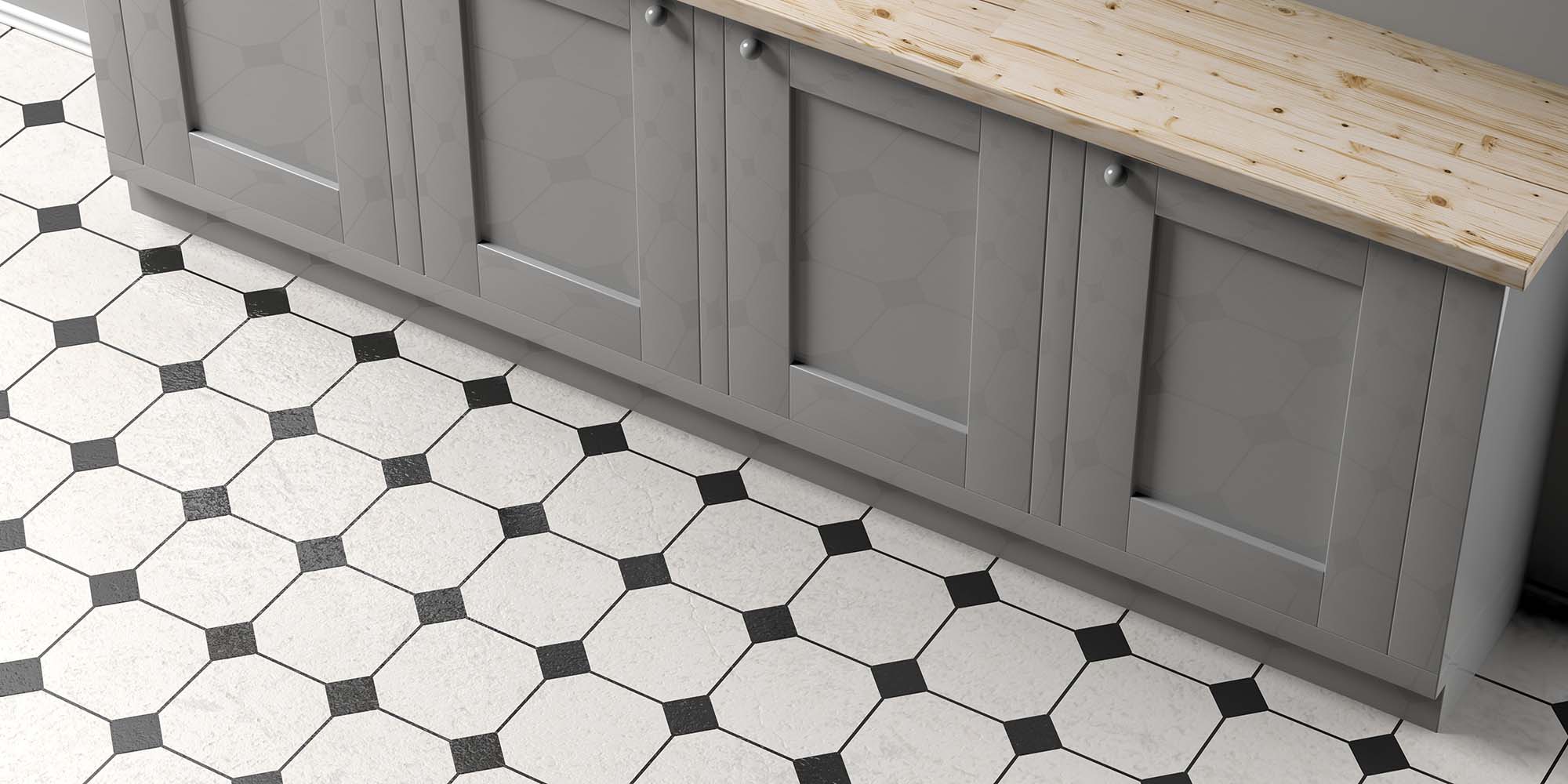
Checkerboard tile is having a real comeback, but the modern version is less diner nostalgia and more design discipline. The pattern works because it brings instant rhythm to a space. It creates movement, sharpens geometry, and gives even a simple room a more intentional point of view.
That said, checkerboard tile is not universally flattering. Room proportions, lighting, grout width, tile finish, and the number of visual interruptions all affect whether it lands as elegant or exhausting. For homeowners working with Sacwal Flooring Centres, the smarter question is not whether checkerboard is “in.” It is where it performs best in daily life and where it will still look right five or ten years from now.
Why checkerboard works in the first place
Checkerboard flooring succeeds when the room benefits from structure. A two-tone grid naturally organizes space. It can make a compact room feel styled rather than forgotten, and it can give a transitional zone a stronger sense of arrival.
The technical upside is that checkerboard is built from a very legible layout. Installers can maintain clean reference lines, and homeowners can usually visualize the finished floor more easily than with a scattered decorative pattern. The risk, however, is scale. If the tile is too large for the room, the pattern can feel clumsy. If it is too small, the floor can look fussy and the grout network can become the star of the show for all the wrong reasons.
The best case for checkerboard in an entryway
An entryway is usually the strongest candidate for checkerboard tile. It already functions as a threshold space, and threshold spaces benefit from pattern. Mud, salt, wet shoes, and daily traffic also make tile a practical material choice, especially in Ontario homes where weather brings in grit and moisture through much of the year.
Checkerboard works particularly well in entryways because the pattern reads quickly. You do not need a large footprint to appreciate it. Even a modest vestibule can carry the look if the tile size is scaled correctly.
For most entryways, the sweet spot is often a medium-format tile that creates enough visible repetition without leaving you with only four giant squares across the entire floor. A matte or low-sheen porcelain is usually the safest specification. It provides durability, easier upkeep than polished surfaces, and better traction under wet conditions.
If the entry connects directly to hardwood or another warm-toned floor, consider lowering the contrast. Cream and taupe, soft greige and charcoal, or warm white and muted clay usually age better than stark black and white in a family home. The lower-contrast version still gives the checkerboard effect without shouting.
When a powder room makes more sense
A powder room is the better choice when you want checkerboard to feel decorative, intimate, and distinctly styled. Smaller rooms can carry bolder pattern because the visual field is tighter. The floor becomes a moment instead of a whole-home commitment.
Powder rooms also tend to have fewer hard-working demands than front entries. There is less abrasive dirt, less winter moisture, and usually less worry about debris scratching the surface. That opens the door to more expressive material choices, including honed stone looks or slightly richer contrast.
The caveat is that powder rooms can become crowded visually very fast. If you already have wallpaper, a dramatic vanity, statement sconces, and bold hardware, a checkerboard floor can tip the room from layered to overloaded. In that case, simplify one element. A quieter wall or a calmer vanity finish gives the floor room to breathe.
In most powder rooms, smaller tile sizes tend to look more resolved because they suit the scale of the room. But grout color matters. Bright contrasting grout can make a compact room feel chopped up. A tighter tonal grout match usually keeps the look cleaner.
What makes checkerboard look expensive instead of trendy
The difference is restraint.
The most successful checkerboard floors usually share a few traits. The tile size fits the room. The grout joint is consistent and not overly thick. The finish is practical, not slippery. The contrast level suits the architecture of the house. And the surrounding materials do not compete for attention.
Another detail people overlook is layout orientation. A straight set checkerboard feels more traditional and architectural. A diagonal installation can add more movement, but it also increases cuts at the perimeter and can make smaller spaces feel busier. In homes where simplicity is the goal, straight set is often the stronger call.
Transitions matter too. If checkerboard tile dies awkwardly into another flooring material without a thought-out threshold, the whole effect feels less custom. The pattern should feel integrated into the room, not dropped in.
So should you choose the entryway or the powder room
Choose the entryway if you want durability, an instant sense of arrival, and a pattern that earns its place through both function and style.
Choose the powder room if you want a more editorial design moment, are comfortable with a stronger decorative effect, and want to test the look in a smaller space first.
For many homes, the entryway is the more practical long-term winner. For design-forward homes with a quieter palette elsewhere, the powder room can be the more memorable move. The right answer depends less on trend and more on room proportions, traffic, moisture exposure, and what the rest of your finishes are doing.
If you are weighing tile size, contrast, finish, and transition details, Sacwal Flooring Centres can help you compare samples in person across Chatham, ON, London, ON, Sarnia, ON, and Windsor, ON and choose a checkerboard look that fits the house instead of fighting it. Sacwal Flooring Centres serves homeowners across Chatham, ON, London, ON, and Sarnia, ON, with showrooms in Chatham, London, Hyde Park in London, Sarnia, and Windsor. Contact us to start planning your tile layout, review room-specific options, and book a consultation.

