

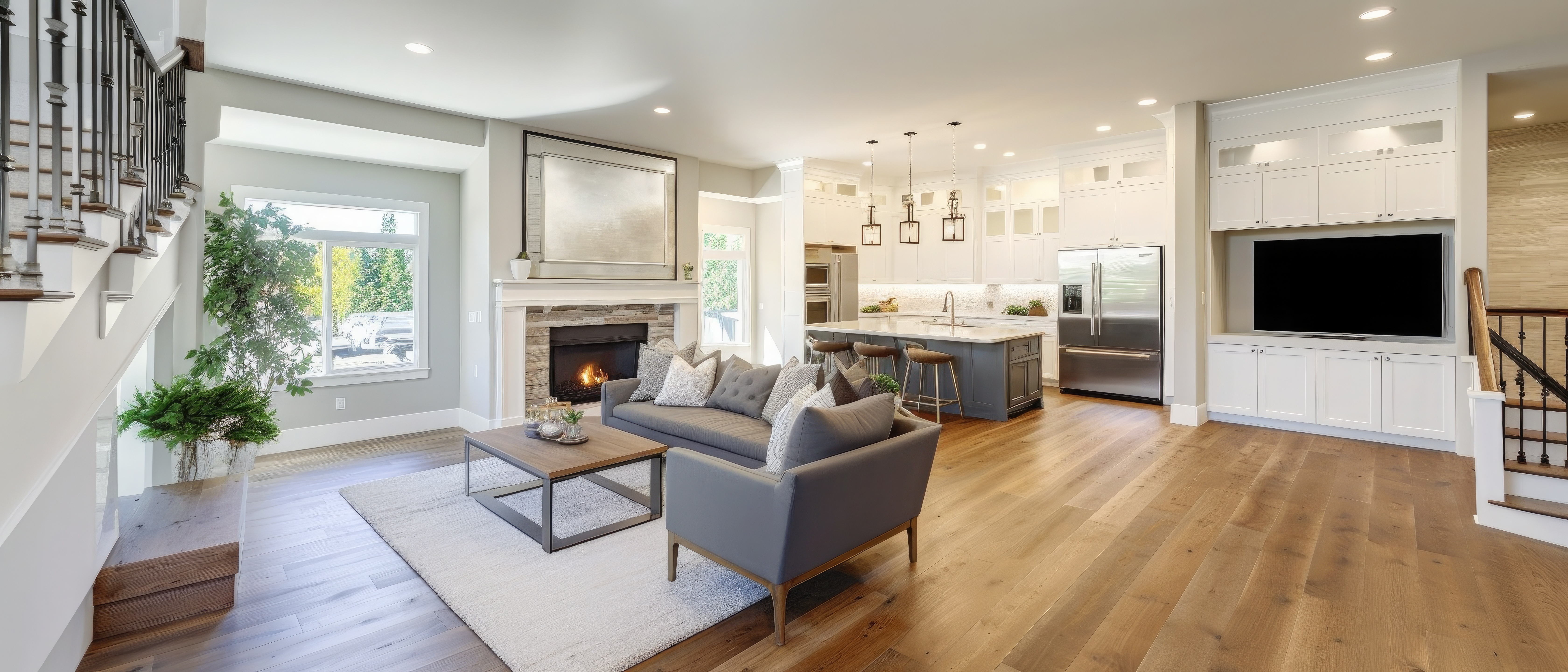
Open-concept layouts dominate modern Ontario homes, but what designers celebrate visually, homeowners often regret acoustically. Sound travels faster, farther, and louder when walls disappear. At Sacwal Flooring Centres, with showrooms across Chatham, ON, London, ON, Sarnia, ON, and Windsor, ON, we see homeowners shocked by how much flooring choice alone affects echo, footfall noise, and overall comfort. Understanding how carpet and hardwood behave acoustically is critical before installation.
Why Open-Concept Homes Amplify Noise
Ontario homes typically use engineered wood joists or dimensional lumber with plywood or OSB subfloors. In open layouts, these large uninterrupted surfaces act like soundboards. Without walls to interrupt vibration paths, impact noise (footsteps, dropped objects) and airborne noise (voices, TV) travel freely. Flooring becomes the primary acoustic moderator.
Carpet: Superior Impact Noise Control
From a technical standpoint, carpet outperforms hardwood for noise reduction — specifically impact insulation. Carpet systems absorb sound at multiple layers:
Carpet fiber diffuses airborne sound
Carpet backing dampens vibration
Underpad reduces impact transmission to the subfloor
The key metric here is IIC (Impact Insulation Class). Carpet with a quality 8–10 lb rebond or memory-foam underpad can increase IIC ratings by 20–30 points compared to hardwood. This is critical in Ontario homes with second floors or basement living spaces.
Carpet Fiber and Pile Matter
Not all carpet performs equally. For noise control:
Dense loop or textured cut-loop carpets outperform plush styles
Solution-dyed nylon maintains density longer than polyester
Lower pile height with higher face weight absorbs sound without feeling spongy
In open-concept living/dining/kitchen zones, these specs dramatically reduce echo without sacrificing durability.
Hardwood: Reflective by Nature
Hardwood is acoustically reflective. Sound waves bounce rather than dissipate. In open spaces, this creates:
Footstep amplification
Hollow-sounding floors
Increased room reverberation
Engineered hardwood installed as a floating floor worsens this effect due to air gaps beneath planks.
How to Improve Hardwood Acoustics
Hardwood isn’t automatically wrong — but it requires technical mitigation:
Glue-down installation reduces vibration compared to floating floors
Acoustic underlayments rated for IIC improvement (not basic foam)
Wider planks with stable cores minimize resonance
Still, even optimized hardwood rarely matches carpet’s sound absorption.
Hybrid Solutions That Work
Many Ontario homeowners choose hardwood for aesthetics and carpet for acoustics. Strategic zoning works well:
Carpet in upper-level bedrooms and stairs
Area rugs with felt underpads in open living areas
Carpet runners in high-traffic sound paths
This layered approach balances noise reduction and resale value.
Final Thoughts
Noise comfort is rarely discussed — until it becomes a daily frustration. Choosing between carpet and hardwood in open-concept Ontario homes requires understanding acoustic ratings, subfloor behavior, and installation methods. Visit Sacwal Flooring Centres to experience real flooring systems in person and get expert guidance. We proudly serve homeowners across Chatham, ON, London, ON, and Sarnia, ON. Call today to design a quieter, more comfortable home.

